Dynamic Achievers is a 501(c)(3) dual-cohort STEAM and workforce intermediary that removes access barriers, builds measurable skills, and connects underserved Louisianans to school success, postsecondary readiness, credentials, and quality employment.
Louisiana's vibrant culture meets urgent workforce needs. Ranked 46th in education with a 19.6% poverty rate — and a growing tech sector that needs skilled talent now.


Youth STEAM pipeline (grades 3-12) and adult upskilling (ages 18-45) share transportation, meals, wellness, and data infrastructure.
From curiosity in elementary to capstones and internships in high school — a developmental sequence over years, not months.
See the platform
Flexible entry and re-entry: bridge skills, specialization modules, credential stacking, work-study, and employer placement.
See the platformStructured work-based learning ladder from elementary exposure to direct placement and advancement tracking.
See employer strategyNot optional add-ons — they're performance infrastructure built into the operating model.
"Dynamic Achievers becomes differentiated by its ability to connect elementary exposure, secondary pathway formation, adult upskilling, and employer demand in one integrated platform."
Dynamic AchieversDynamic Achievers’ 10-year planning horizon (2026–2035) phases from flagship implementation to multi-site expansion and replication readiness — proving value at each stage before scaling.
The youth cohort is the foundation of the model — a Grades 3–12 STEAM pipeline inspired by Sweden's national STEM strategy, emphasizing early and repeated contact with science, technology, problem-solving, and confidence-building in technical subjects. The program is not one class or one summer; it is continuity over years.
The adult cohort adds a second pathway for ages 18–45, following Singapore's SkillsFuture logic: skills-first progression, structured work-study, stackable credentials, and support for early-career adults, underemployed workers, and mid-career transitions. The result is a more durable value proposition for employers, funders, and public partners.
Both cohorts share one operating backbone — transportation, meals, mental wellness, data dashboards, and employer advisory. Cross-referenced to the Bureau of Labor Statistics (cybersecurity analysts +29%, CS research scientists +20%), the World Economic Forum (39% of core skills changing by 2030), and the U.S. Department of Education (Perkins V, stackable credentials, work-based learning).
The organization's 10-year planning horizon (2026–2035) is built around disciplined phasing: it proves value at each stage before scaling, with measurable success markers gating every transition.
Each phase earns the right to the next through demonstrated performance.
Stand up the flagship site, refine youth Grades 3–8 delivery, pilot adult bridge and core tracks, activate transportation and meal systems, and establish baseline dashboards. Prove that the dual-cohort model can operate under one backbone.
Add full youth high school progression (Grades 9–12), adult specialization modules, stronger employer advisory functions, and multi-site operations across Greater New Orleans.
Expand corridor presence, add Baton Rouge pilot/partner delivery, formalize work-based learning and credential pathways, and strengthen evaluation and development infrastructure.
Build reserves, deepen leadership bench, formalize training and quality-assurance systems, and prepare the model for statewide replication or strategic partnerships.
It starts earlier than most workforce efforts — introducing identity, confidence, and technical fluency in elementary grades. It stays later than most youth models — supporting capstones, career navigation, and internships through high school.
Not a copy of the youth model for older participants — a different business line serving recent graduates, disconnected young adults, incumbent workers, career-switchers, and parents with flexible entry and re-entry.
Growth is phased only after the flagship site and dashboards are stable. Each phase has measurable success markers — the model doesn't expand until it proves reliable delivery and repeat funder confidence.
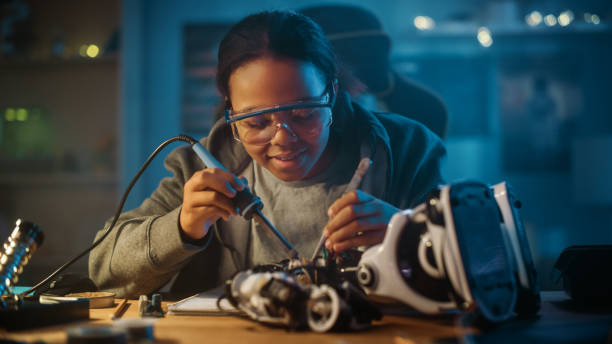
AI & Data · Cybersecurity · Software & Cloud · Robotics · Digital Design — each running from Grades 3 through 12.
Transportation, meals, and mental wellness are performance infrastructure, not optional support services. A curriculum-centered model without access systems will underperform regardless of instructional quality.
The organization combines early exposure, long-range progression, adult re-entry, and measurable outcomes under one system — more useful to the state than a narrow youth program, more trusted than a pure training vendor.
Greater New Orleans first, Baton Rouge corridor second. Sites screened for large classrooms, cafeteria, gym, parking, and dual-cohort fit.
Five revenue sources: federal grants (38%), philanthropy (25%), corporate (17%), earned revenue (10%), and the state/local anchor (10%). The model is designed for resilience.
Whether you're a state agency, employer, funder, or community partner — we're building a coalition for lasting impact in Louisiana.